
by Marsh Finance on Sep 18, 2024, 10:10:01 AM
Your driving test can be scary, but knowing the most common driving test mistakes can help you avoid slipping up on your test. We’ve covered some of the top tips to pass your driving test in a separate piece. In this specialist driving test blog, we’ve taken a look at the most driving test fails that people make across the UK. These mistakes have been provided by the UK government, which you can find here.
For more information on all things driving tests, visit our piece 'everything you need to know about passing your driving test'.

The Most Common Driving Test Mistakes
Observation Mistakes At Junctions
Quick summary: Poor observations at junctions, give way lines, slip roads and emerging traffic are among the most common reasons learners fail driving tests.
This is quite an obvious one, but lots of people fail to spot potential issues when they are most important, like at junctions and slip roads. When emerging from a slip road, failing to look right can potentially cause a serious accident if the cars are moving at speed. When emerging from give way junctions, failing to look right for oncoming traffic and left for parked cars and pedestrians can potentially cause you to fail. Check your surroundings at all times, but especially when you are approaching junctions, roundabouts or joining other roads
Not Being Aware When It’s Really Needed
This is quite an obvious one, but lots of people fail to spot potential issues when they are most important, like at roundabouts, junctions and slip roads. Failing to check for oncoming traffic at roundabouts can lead to oncoming traffic having to slow down to accommodate you. When emerging from a slip road, failing to look right can potentially cause a serious accident if the cars are moving at speed. When emerging from give way junctions, failing to look right for oncoming traffic and left for parked cars and pedestrians can potentially cause you to fail. Check your surroundings at all times, but especially when you are approaching junctions, roundabouts or joining other roads.
.webp?width=800&height=300&name=Looking%20(1).webp)
Failing To Use Your Mirrors
Quick summary: Missing mirror checks before changing speed, direction or moving away is one of the most common driving test faults.
This is one of the most common driving test fails and is such an easy mistake to make. Not checking your mirrors throughout your drive won’t help your case, but failing to check when joining new roads, emerging junctions and setting off from stationary positions might even see you fail. That’s because missing mirror checks increase the risk of serious faults. The best way to avoid making this mistake is by constantly checking mirrors throughout, and making it clear to your examiner that you are doing so. This is a point we covered in a separate piece, titled ‘the top ten tips for passing your practical driving test’.
Not Moving Away Safely
Quick summary: Moving away without observations, blind spot checks or vehicle control can lead to serious faults.
Failing to move away from a stationary position safely is a common driving test mistake people make. This could be anything from a traffic jam to an instruction from an examiner to stop and move away. Getting your move away right is important, as you could stall or potentially set off too quickly and endanger cars ahead of you. To guard against this, make sure you have your bite in manual cars before releasing the handbrake, and have a scan of all your surroundings before pulling away. Just taking that extra second to get ready and check your mirrors could be the difference between passing and failing.
.webp?width=800&height=300&name=Change%20Arrows%20(1).webp)
Not Positioning Your Car Correctly At A Right Turn
Quick summary: Incorrect positioning at junctions, roundabouts and narrow roads can affect safety and traffic flow.
Right turns can be tricky, especially if you are having to wait for oncoming traffic to pass before turning. This situation is a sticking point for lots of drivers in their tests, with them struggling to position the car correctly. A common driving test mistake is being too far over to the left. This is easy to do as you look to avoid the oncoming traffic, but it can actually endanger you by blocking the passing traffic on your left. Blocking the lane is considered a major offence, and could see you failing your test. Another issue is if you are too far to the right, and you end up blocking oncoming traffic. Sadly, this will result in the same outcome: failing your test. To prevent this from happening, check your mirrors and the road markings below you as you approach a right turn. Take your time, and trust your car placement, and don’t take your eyes off the road.
Failing To Follow Traffic Lights Correctly
Quick summary: Missing traffic signals, running red lights or reacting late to road markings can lead to driving faults or immediate failures.
Not being able to follow traffic light rules successfully tends to happen quite often. This displays to the examiner that you can’t follow signs and drive independently, so getting it right is important. The most common occurrences are running red lights and failing to see that a light is green. Take your time and pay attention to the traffic lights; they are there to help you, not hurt you.
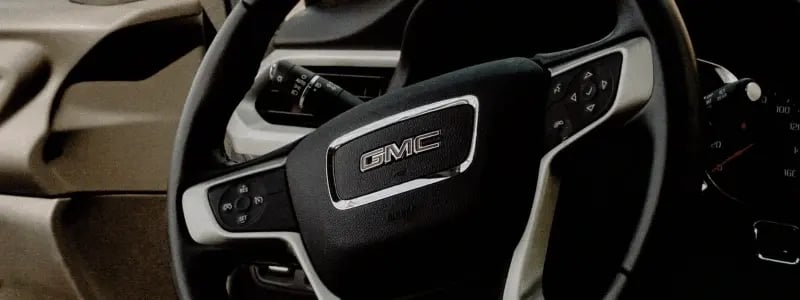
Failing To Control The Steering
Quick summary: Smooth steering, vehicle control and safe positioning matter more than exact hand placement during the driving test.
Having one hand on the wheel or not being at ten and two in your positioning are common errors people make. Not having your hands at ten and two won’t cause you to fail, but it will be an unnecessary minor fault that you could have avoided. Remember to keep both hands available on the wheel, which helps maintain control. The examiner is more interested in safe steering, smooth control and vehicle positioning than exact hand placement. This not only stops you from getting a minor but also helps you keep control of the car in the best way possible.
Mis-Reading Road Signs And Markings
Quick summary: Missing road signs, lane arrows or speed changes can affect independent driving performance and lead to faults.
These errors tend to happen fairly often and don’t necessarily mean a fail, but they do hurt your chances of passing. As part of the driving test, you will be expected to drive independently and follow road signs. An inability to do this shows the examiner that you might not be ready to pass. Brush up on your car theory beforehand and get into the habit of following road signs. Knowing your local area can help, too, as roads you have already driven on become more familiar and easier to navigate. We covered this in more detail in the top ten tips to pass your driving test.
Poor Road Positioning
Quick summary: Incorrect road positioning at junctions, roundabouts and narrow roads can affect safety and traffic flow.
This can happen without you even realising. You might be so caught up in the test that you forget to check your road positioning. This is easy to do, but the consequences can be serious. Make sure that as part of your constant checks, you assess your road position and make adjustments if need be. Pay particular attention to road positioning at junctions and right-turn traffic lights.
Driving At A Dangerous Speed
Quick summary: Driving too quickly or unnecessarily slowly can both lead to driving test faults.
Perhaps one of the most obvious errors, drivers can often go over the speed limit. This is frowned upon by examiners, as it displays a recklessness and lack of awareness. Add speedometer checks into your checking process whilst driving, and adjust the car if you’re going too quickly. At the other end of this, you can pick up minor errors for driving too slow. This is another common error, as drivers look to air on the side of caution and drive slightly slower to avoid going over the limit. Examiners notice this and can mark you down for it. Drive at a pace which is suitable for the road and traffic you are encountering, sticking to the limit but not being too slow that the examiner notices

Forgetting Blind Spot Checks
Missing blind spot checks before moving away is one of the most common serious driving test faults.
Make sure you’re checking mirrors regularly, and get used to doing it enough that it becomes second nature. Check your centre and side mirror aswell as blind spot before moving away or from a parked start. Instructors won’t penalise you for over-looking, as long it doesn’t impact your concentration.
Poor Planning And Anticipation
Quick summary: Many driving test faults happen because learners react too late instead of planning ahead.
Examples include:
- Braking sharply
- Rushing junctions
- Following vehicles too closely
- Late lane changes
- Missing road signs or traffic lights
- Reacting too slowly at roundabouts
.webp?width=800&height=300&name=Roundabout%20Overhead%20(1).webp)
Common Roundabout Driving Test Mistakes
Roundabouts combine observation, lane discipline, signalling, speed control and judgement, making them one of the biggest causes of driving test faults.
Roundabouts require plenty of attention on test day. That’s because all of the following can come in to play when driving on a roundabout:
- You could enter the roundabout too quickly, causing the instructor to intervene.
- Failing to give way to the right.
- Entering the wrong lane. Even if this doesn’t impact the traffic around you, the instructor will notice.
- Missing mirrors on exit. Make sure you’re checking your mirrors as you prepare to leave the roundabout.
- Driving too quickly on the roundabout.
- Hesitating. Taking too long to make a decision shows a lack of confidence whilst building up traffic.
Reverse Parking Mistakes During The Driving Test
Quick summary: Parallel parking and bay parking faults usually happen because of poor observations, rushing or inaccurate positioning.
Parallel parking and bay parking faults usually happen because of poor observations, rushing or inaccurate positioning.
Reverse parking errors lead to kerb contact and positioning faults.
Here are a few things to avoid whilst reverse parking:
- Making contact with the kerb.
- A lack of observation of the surrounding area.
- Mounting the pavement.
- Reversing too quickly.
- General loss of control and failure to complete the park.
Sounding Off On Driving Test Mistakes
So there you have it, the most common mistakes drivers make on tests. As you can see in the list, a lot of these can happen fairly easily, especially if you aren’t concentrating properly. To guard against making these mistakes, take mock driving tests with your instructor and get into a habit of always checking whilst driving. This can help you spot an error early and correct it. Last of all, don’t be too harsh on yourself. Driving test mistakes happen, and it’s about how you respond in the test that matters. Trust your instincts and ability as your instructor does and take on the test with ease.

Looking For More Driving Test Advice?
View more of our helpful test tips and pass with flying colours.
Everything You Need To Know About Driving Tests
How Much Does It Cost To Learn To Drive?
How To Choose A Driving Instructor
How To Drive A Manual Car
How To Drive An Automatic Car
How To Prepare For Your Theory Test
Learning To Drive With A Disability
Minor And Major Driving Faults And How To Avoid Them
Should I Take An Intensive Driving Course?
The Pros And Cons Of Learning To Drive With A Family Member Or Friend
The Top Ten Tips To Pass Your Practical Driving Test
Why Are Driving Test Waiting Times So High?
Frequently Asked Questions About Driving Test Mistakes
What is the biggest reason people fail a driving test?
Observation mistakes at junctions are one of the most common reasons people fail a driving test. Learners can receive faults for poor observations at roundabouts, emerging from side roads, moving off unsafely, or failing to judge oncoming traffic correctly. Mirror checks are another frequent issue.
Can you fail for forgetting mirrors?
Yes. Forgetting to check mirrors during a driving test can lead to faults and may become a serious fault if it affects another road user. Mirror checks are important before signalling, changing direction, braking, moving off, leaving roundabouts, and changing lanes.
Can driving too slowly fail a driving test?
Yes. Driving significantly below the speed limit without a valid reason can result in a driving fault. Driving too slowly may interrupt traffic flow, create hesitation, or show a lack of confidence. Examiners look for safe, progressive driving that suits the road conditions.
Can touching the kerb fail a driving test?
Touching the kerb does not always mean an automatic fail. Light contact during a manoeuvre such as parallel parking may result in a minor fault. However, mounting the pavement, striking the kerb heavily, or losing control of the vehicle could become a serious driving fault.
Are roundabouts common fail points?
Yes. Roundabouts are a common area for driving test faults because they combine several skills at once, including observation, lane discipline, signalling, speed control, mirror checks, and judgement. Common mistakes include entering too quickly, choosing the wrong lane, missing observations, and failing to give way.
How many minors are allowed on a driving test?
You can usually receive up to 15 minor driving faults and still pass your practical driving test. However, receiving a serious or dangerous fault will normally result in a fail, even if you have few or no minor faults.
What are serious driving faults?
Serious driving faults are mistakes that create a potential danger to you, other road users, pedestrians, or property. Examples include unsafe observations, dangerous lane changes, running red lights, or causing another vehicle to brake suddenly.