
by Marsh Finance on Mar 21, 2025, 3:22:35 PM
Pedestrian crossings in the UK include zebra, pelican, puffin, toucan, Pegasus, parallel (Tiger), school crossings and pedestrian refuge islands. Some crossings use traffic lights and sensors, while others rely on road markings and pedestrian priority rules.
Understanding the different crossing types can help with driving theory test revision, road safety knowledge and understanding the Highway Code.
|
Crossing |
Traffic Lights |
Cyclists Allowed |
Horse Riders Allowed |
Sensors |
Pedestrian Priority |
|
Zebra |
No |
No |
No |
No |
Yes |
|
Pelican |
Yes |
No |
No |
No |
During signal |
|
Puffin |
Yes |
No |
No |
Yes |
During signal |
|
Toucan |
Yes |
Yes |
No |
Sometimes |
During signal |
|
Pegasus |
Yes |
Sometimes |
Yes |
No |
During signal |
|
Parallel |
No |
Yes |
No |
No |
Yes |
Uncontrolled Pedestrian Crossings
Uncontrolled crossings do not use traffic lights and rely on driver awareness and pedestrian priority rules.
Zebra Crossing
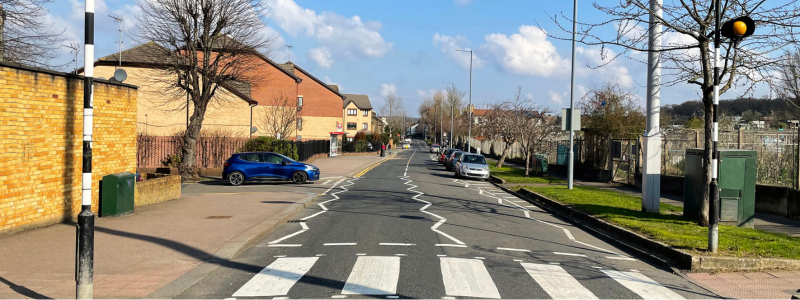
A zebra crossing uses black and white road markings instead of traffic lights. Drivers should give way to pedestrians waiting to cross, and the crossing is marked with flashing amber Belisha beacons on either side of the road.
Used for: pedestrians
Signals: black and white stripes with Belisha beacons
Typical location: residential roads, town centres, shopping areas
Pedestrian Refuge Islands
Pedestrian refuge islands sit in the middle of the road and allow pedestrians to cross in one direction at a time. These crossings do not use traffic lights or push buttons; instead, they provide a safe waiting area between traffic lanes. Refuge islands are commonly used on wider roads.
Used for: pedestrians
Signals: central island and road markings
Typical location: wider roads, busy streets, urban routes

Controlled Pedestrian Crossings
Controlled crossings use traffic lights, sensors or pedestrian signals to manage traffic flow.
Pelican
A pelican crossing is a signal-controlled pedestrian crossing that uses push buttons and traffic lights to control when pedestrians can cross. These crossings use a flashing amber phase for drivers after pedestrians have crossed and are commonly found in towns and cities.
Used for: pedestrians
Signals: red and green pedestrian lights with flashing amber traffic phase
Typical location: urban roads, town centres, residential areas
Puffin
A puffin crossing is an intelligent pedestrian crossing that uses sensors to detect pedestrians waiting and crossing. The system can increase crossing time for slower walkers and cancel requests if nobody crosses. Puffin crossings place the pedestrian signals on the same side of the road.
Used for: pedestrians
Signals: near-side pedestrian lights and smart sensors
Typical location: urban roads, busy crossings, modern developments
Toucan
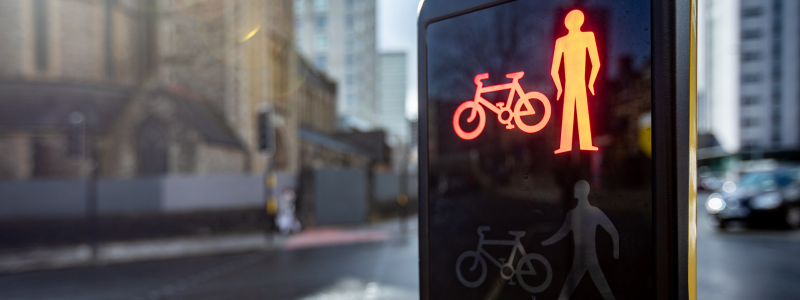
A toucan crossing allows both pedestrians and cyclists to cross together. These crossings use traffic lights and display a green pedestrian and bicycle signal when it is safe to cross. Cyclists can ride across without dismounting.
Used for: pedestrians, cyclists
Signals: pedestrian and bicycle crossing lights
Typical location: cycle routes, shared paths, urban roads
Pegasus Crossing
A Pegasus crossing is designed for horse riders and pedestrians. These crossings include high-mounted push buttons so riders can activate signals without dismounting. Pegasus crossings are often found near bridleways and rural roads.
Used for: horse riders, pedestrians
Signals: horse icon and pedestrian signals
Typical location: rural roads and bridle paths
Less Common Pedestrian Crossings In The UK
Parallel (Tiger) Crossing
A parallel crossing, sometimes called a Tiger crossing, allows both pedestrians and cyclists to cross side by side. These crossings combine a zebra crossing with a separate cycle lane, allowing cyclists to ride across without getting off their bikes. Parallel crossings are often found near cycle paths and shared walking routes.
Used for: pedestrians, cyclists
Signals: zebra markings and separate cycle crossing area
Typical location: cycle routes, shared pathways, urban areas
School Crossing Patrol
A school crossing patrol helps children and pedestrians cross safely near schools. The crossing is controlled by a patrol officer using a stop sign, and drivers must stop when instructed.
Used for: school children, pedestrians
Signals: handheld stop sign and warning lights
Typical location: school entrances, residential roads, school zones
Courtesy Crossing
A courtesy crossing is an informal crossing area without traffic lights or legal pedestrian priority. Drivers often stop voluntarily, but pedestrians should not assume vehicles will always give way.
Used for: pedestrians
Signals: informal markings or raised surfaces
Typical location: retail parks, shared spaces, town centres
Staggered Crossing
A staggered crossing splits a crossing into two sections using a central refuge island. Pedestrians cross one direction of traffic before moving to the second stage.
Used for: pedestrians
Signals: refuge island and crossing markings
Typical location: dual carriageways, wider roads, busy routes
Pedestrian Crossing Signals And Road Markings
Different crossings use signs, signals and markings to show when it is safe to cross and help drivers identify pedestrian priority areas.
Green Man Signal
The green man signal means pedestrians may begin crossing. It appears at pelican, puffin, toucan and Pegasus crossings.
Red Man Signal
The red man signal means pedestrians should not start crossing. If already crossing, pedestrians should continue safely to the other side.
Belisha Beacons
Belisha beacons are flashing amber lights found at zebra crossings. They warn drivers that a pedestrian crossing is ahead.
Zigzag Road Markings
White zigzag lines appear before and after many pedestrian crossings.
Drivers should not:
- Park
- Overtake
- Stop unnecessarily
Tactile Paving
Tactile paving uses raised surfaces to help visually impaired pedestrians identify crossing locations.
Pedestrian Crossing Rules In The Highway Code
Pedestrian crossings are covered by the Highway Code and include rules for drivers, cyclists and pedestrians.
Important rules include:
- Drivers should prepare to stop when approaching zebra crossings
- Vehicles must not park or stop on zigzag road markings
- Drivers should avoid overtaking near pedestrian crossings
- Drivers must follow school crossing patrol instructions
Pedestrian Crossing Conclusion
Pedestrian crossings in the UK use different combinations of traffic lights, sensors, road markings and pedestrian priority rules. Crossings such as zebra crossings rely on driver awareness, while pelican, puffin and toucan crossings use signals to control traffic flow.
Understanding how each crossing works can help with driving theory tests, road safety and everyday road use.
Looking to switch from a pedestrian to a driver? Marsh Finance offers flexible finance solutions on a number of cars, with an easy application process and swift decisions. Take the first step to new wheels, without impacting your credit score.

Pedestrian Crossing FAQs
What Is The Difference Between A Toucan Crossing And A Pelican Crossing?
A toucan crossing is set up for both bicycles and pedestrians to cross together. They display a bike and person outline and turn green when you can cross. A pelican crossing is only for pedestrians, bikes cannot cross there.
What Are The Different Types Of Pedestrian Crossings In The UK?
There are plenty of different pedestrian crossings in the UK. The most common ones are:
- Pelican crossing
- Toucan crossing
- Zebra crossing
- Puffin Crossing
What Is A Toucan Crossing?
A toucan crossing is set up for both bicycles and pedestrians to cross. These display outlines of a person and a bike and turn green when it’s time to cross. Toucan crossings appear at traffic lights.
What Is A Pelican Crossing?
A pelican crossing is a traditional crossing, where pedestrians must wait for a green signal to cross. On the crossing sign, a person outline shows. When it’s your turn to cross, it will turn green. Pelican crossings appear at traffic lights.
What Is A Zebra Crossing?
A zebra crossing uses black and white road markings instead of traffic lights. Drivers should give way to pedestrians waiting to cross. Zebra crossings are marked with flashing amber Belisha beacons on either side of the road.
What Is A Puffin Crossing?
A puffin crossing is a smart pedestrian crossing that allows pedestrians to cross. Where a puffin crossing differs is in the technology. These crossings use sensors to detect when someone is ready to cross and also to measure how quickly someone is crossing a road. If someone presses the wait button and then walks off, the crossing will actually cancel, preventing cars from having to come to an unnecessary stop. If someone is walking across the puffin crossing at a slower speed than the average walker, it will increase the amount of time you have to cross.
What Is A Pegasus Crossing?
A Pegasus crossing is designed for horse riders and pedestrians. These crossings use higher mounted push buttons so riders can activate signals without leaving their horses.
What Is A Tiger Crossing?
A Tiger crossing, also called a parallel crossing, combines a zebra crossing with a cycle crossing so pedestrians and cyclists can cross together.
What Is A Pedestrian Refuge Island?
A pedestrian refuge island sits in the middle of the road and allows pedestrians to cross traffic in two stages.
What Are Belisha Beacons?
Belisha beacons are flashing amber lights found at zebra crossings that warn drivers a pedestrian crossing is ahead.
What Is Tactile Paving?
Tactile paving uses raised surfaces to help visually impaired pedestrians identify crossing points.
What Do Zigzag Road Markings Mean?
Zigzag road markings warn drivers they are approaching a crossing area. Drivers should not stop, park or overtake in these zones.