Prime Vs Near-Prime Vs Sub-Prime: What’s The Difference?
|
Customer Type |
Typical Credit Profile |
Likelihood Of Approval |
The Reality For Your Dealership |
|
Prime |
Strong credit history. |
High |
The easy wins. |
|
Near-Prime |
Some adverse credit or limited credit history. |
Moderate to high (with Marsh) |
The growth zone. The highest volume of salvageable deals sitting in your pipeline right now. |
|
Sub Prime |
Lower credit score and past issues. |
Lower |
Requires specialist, deep subprime management. |
Decoding Your Finance Funnel: A Closer Look At Each Credit Range
Prime buyers are your easy deals. With stable incomes and spotless credit files, these customers sail through your point-of-sale systems and qualify for the lowest rates. Yes, these customers are the easiest to close, but the prime space is highly commoditised, with the best rate winning out. For you, competing on rate alone squeezes your finance commission, and that’s if you even win the deal.
These are your ‘good buyers with a blip’. They may have solid incomes, a cash deposit and all the affordability necessary to purchase a car, but a small issue like a past missed payment, self-employment or even a thin credit file can lead to an automatic ‘no' from prime lenders.
For most dealerships, this is where the funnel starts leaking money. Many customers are simply lost at this stage, with customers walking out the door unless a specialist lender is on hand.
See how Marsh Finance protects your pipeline with specialist near-prime products.
Subprime customers have experienced more significant adverse credit events or financial difficulties than near-prime customers. This may include defaults, CCJs, arrears or other factors that cause mainstream lenders to view them as higher risk. While approval can be more challenging, many subprime customers can still successfully maintain a finance agreement when matched with the right product and affordability assessment.
.webp?width=600&height=500&name=Credit%20Ranges%20(1).webp)
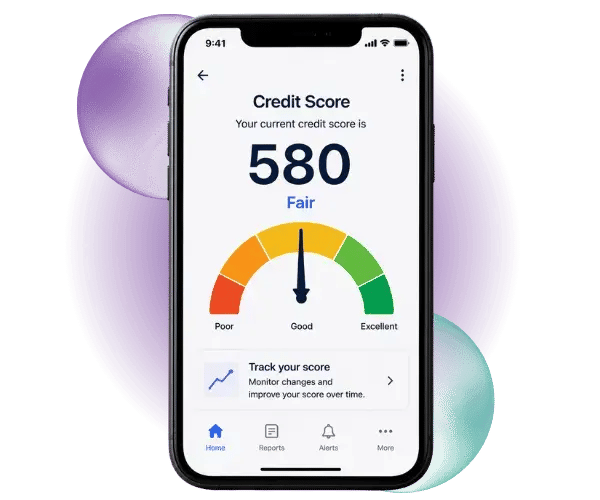
Credit reference agencies use different score ranges, which could mean a slight difference in each credit range from lender to lender.
Why Credit Categories Are Not Fixed: Prime Behaviour, Non-Prime Score
Credit scores are fluid and can change on a monthly basis. A current near-prime applicant may have recently sat in prime but dropped due to factors beyond their control. The cost-of-living crisis has forced many customers into non-prime, even though they still behave like prime customers. If your finance panel only triggers automated decisions based on rigid scoring boxes, your conversion rates will drop as macro-economic conditions shift. Accessing lenders with a flexible underwriting appetite ensures that when a good buyer’s circumstances evolve, your ability to fund the car stays exactly the same.
The Blended Panel: Why Widening Your Net Drives Dealership Growth
Focusing solely on prime customers can limit growth opportunities. A blended customer strategy allows dealerships to serve a broader section of the market, helping to increase finance penetration, reduce lost deals and improve stock turn.
Don’t Let A Single “No” Kill The Sale
Prime lenders mean tight criteria and an expectation for customers to be perfect, but the reality is that most customers aren’t perfect but are still solid applicants who can afford finance repayments. One “no” in the affordability process shouldn’t mean a lost deal, but prime lenders can decline a customer for missing out on credit criteria by a single point. These customers don’t need to be lost. Delivering a non-prime finance product unlocks a new market of ready buyers.
.webp?width=480&height=401&name=Car%20Specific%20Pages%20Content%20(10).webp)
How Underwriting Effort & Payout Speed Differs Between Each Credit Range
|
Credit Range
|
Underwriting Effort & Payout Speed
|
|
Prime
|
Instant, automated approvals with zero hassle.
|
|
Near-Prime
|
Hybrid checks, typically involving Open Banking.
|
|
Sub-Prime
|
Forensic document gathering, including payslips and proof of residency.
|
While prime customers often move through a straightforward approval process, near-prime and sub-prime customers may benefit from a more detailed affordability assessment and, in some cases, manual underwriting. Manual underwriting is a major win not only for the customer but also for the dealer. Manual underwriting gives both parties a second chance for the deal to go through, even if the customer is immediately declined. At a forensic level, the dealer benefits from a human underwriter stepping in to rescue a unit delivery that a prime customer algorithm tried to kill.
.webp?width=552&height=461&name=Car%20Specific%20Pages%20Content%20(8).webp)
How Near-Prime Customers Boost Finance Penetration
Marsh Finance are one of only 2 non-prime PCP providers in the UK. Non-prime PCP stops dealers from having to slash the screen price of the car just to make a standard hire purchase payment fit the buyer’s budget. This protects your front-end profit margin and helps lock in future trade-ins.
Near-prime customers are solid buyers with cash deposits, ready to get their hands on their next car. However, these customers are being wrongly rejected by rigid bank algorithms. Turn these lost deals into approvals with Marsh Finance's non-prime PCP products.
How Marsh Can Help
Marsh Finance are one of only two UK lenders offering non-prime PCP, giving your sales team a powerful new way to:
✅ Increase approval rates
✅ Protect margin on newer stock
✅ Offer lower monthly payments
✅ Keep customers coming back in 2-4 years
Marsh Finance specialises in supporting these buyers, including non-prime PCP and HP, with decisions based on the full situation, not just a credit score. If you want to help more customers drive away approved, speak to Marsh Finance about becoming a dealer partner.

FAQs
Prime customers tend to be stronger customers, with stronger credit histories and a lower risk of missing repayments. Near-prime describes customers who fall just outside of traditional lending criteria. They might have a limited credit history or a past minor financial issue, but these customers are still reliable. Subprime customers are generally viewed by lenders as carrying a higher level of risk due to previous adverse credit events or financial difficulties.
Yes, with time, a near-prime customer can become prime. Credit scores aren’t fixed and can change over time with responsible financial habits and consistent repayment behaviour.
No, subprime customers aren’t always high risk. Credit scores shouldn’t be used as the only affordability measure, as they don’t paint a full picture. A subprime customer could now be financially secure and capable of making repayments as they look to rebuild their score.
Near-prime presents a significant growth opportunity due to the large number of customers who are typically missed in this space. Near-prime customers fall out of traditional lending criteria and are often not supported. Because of this, near-prime car finance provides a significant opportunity to tap into a large customer base.
Yes, near-prime customers can get PCP finance. PCP is popular with near-prime customers due to its flexibility and deferred upfront costs. PCP can be attractive to near-prime customers because it often offers lower monthly payments than other finance products, subject to individual circumstances. Marsh Finance provide near-prime PCP solutions, helping you support customers who traditionally struggle to get accepted.
Dealerships can increase finance penetration by working with lenders that actively support near-prime customers. Many customers who fall just outside prime lending criteria can still be suitable for finance, helping dealerships convert more enquiries into completed sales.
Lenders use credit profiles to help assess risk and determine which finance products may be suitable for a customer. However, credit score is only one factor, with affordability, employment status and overall financial circumstances also playing an important role in lending decisions.
Become A Partner
With over 50 years of experience supporting customers outside of prime lending criteria, Marsh Finance are your key to turning lost deals into written business.
.webp?width=500&height=417&name=Car%20Specific%20Pages%20Content%20(16).webp)
Looking To Learn More About Near-Prime Car Finance?
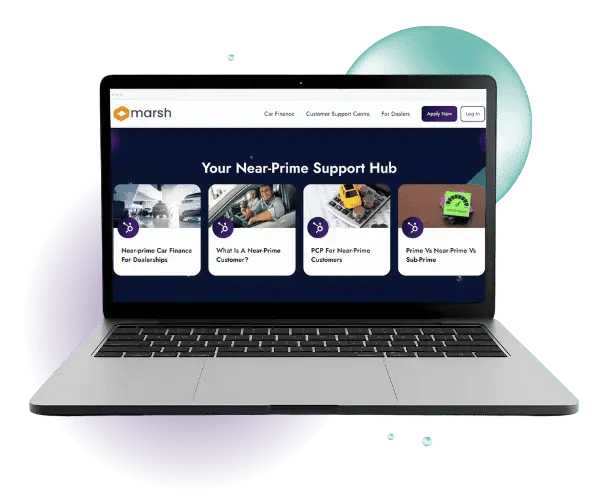
All things near-prime car finance, at your fingertips.